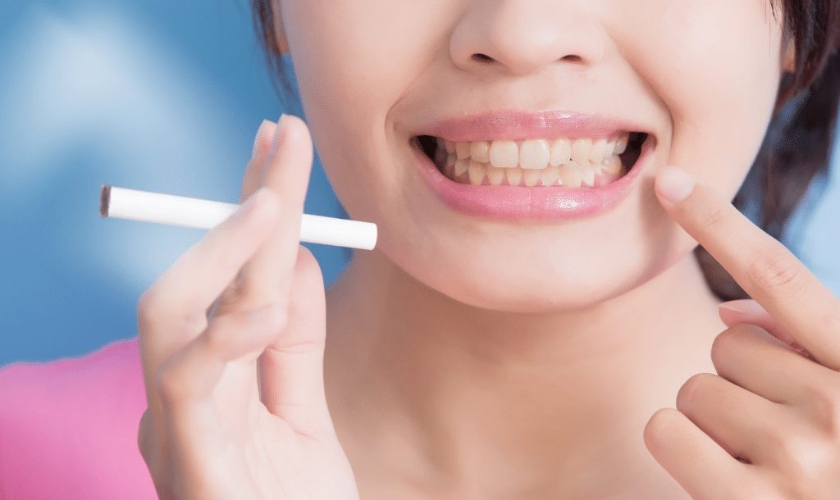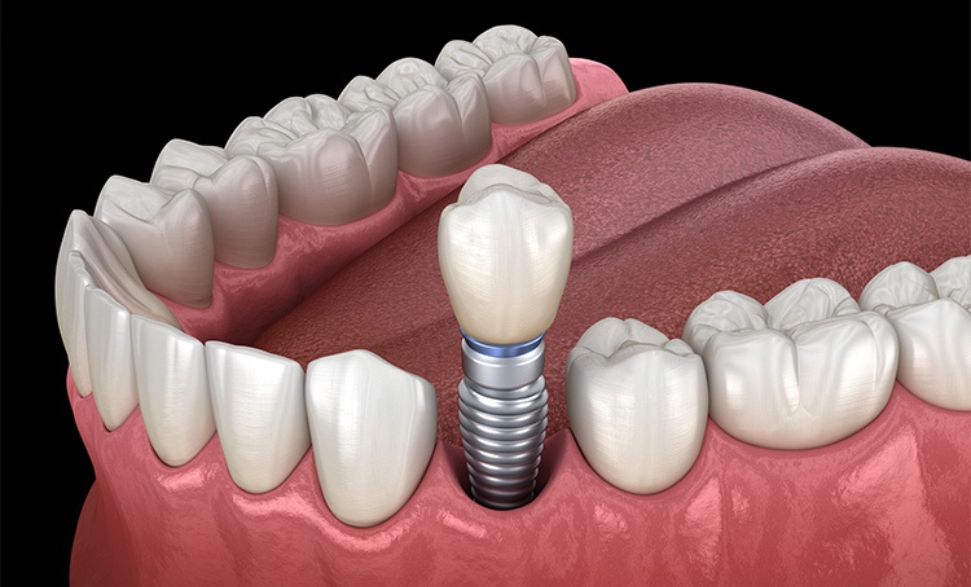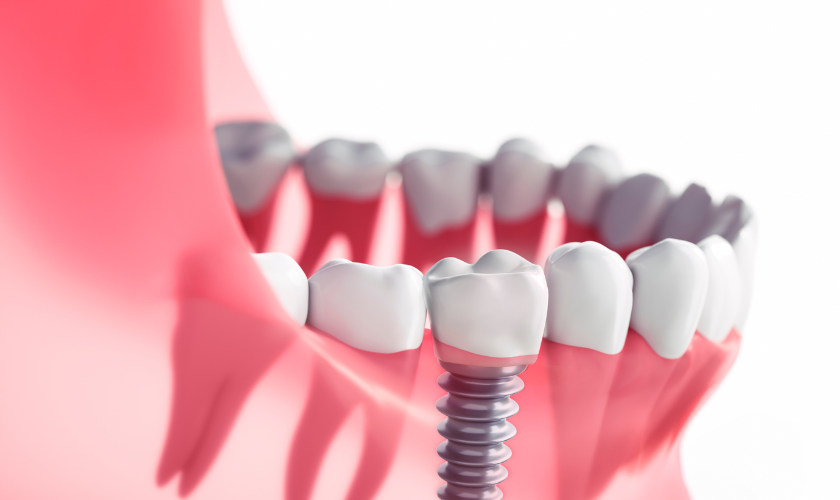


Dental implants are one of the most reliable tooth replacement options available today — but only when your body can fully support the healing process. If you’re a smoker thinking about getting implants, or you’ve already had the procedure and still smoke, this is a conversation worth having, honestly.
The short answer? Yes, smoking can significantly affect how well your implants heal and whether they last.
What Happens to Your Mouth When You Smoke
Most people know that smoking is hard on the lungs. Fewer people think about what an implant does to the mouth, the bone, and the soft tissue it depends on to stay in place.
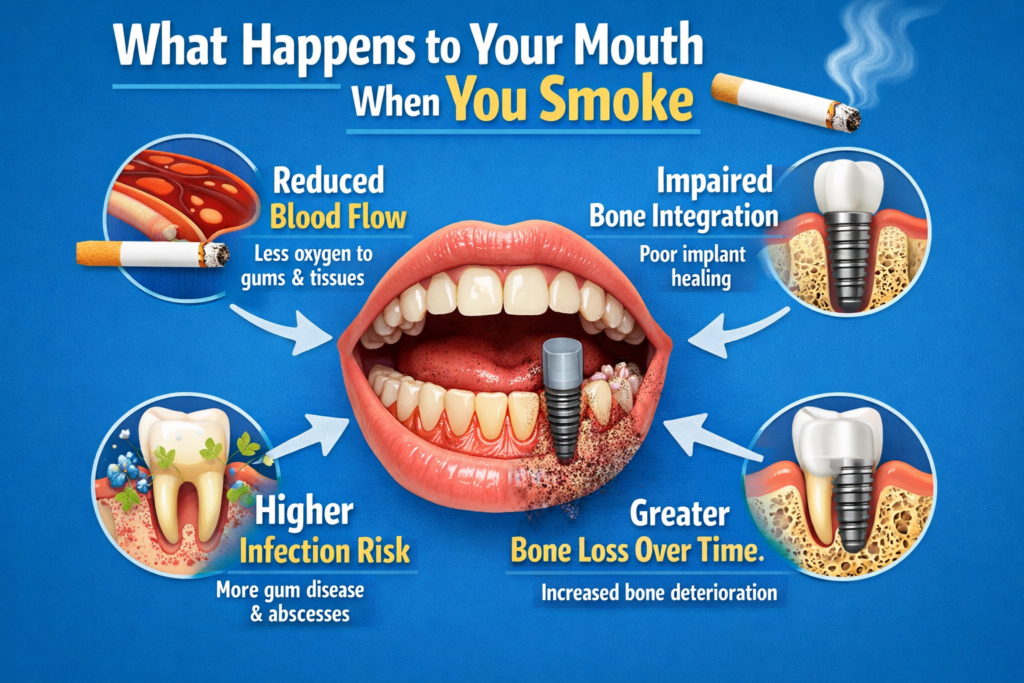
Here’s what’s actually going on beneath the surface:
- Reduced blood flow: Nicotine constricts blood vessels, resulting in less oxygen and fewer nutrients reaching the surgical site. Healing slows down considerably.
- Impaired bone integration: For an implant to succeed, the titanium post must fuse with your jawbone through a process called osseointegration. Smoking disrupts this by interfering with the cells (osteoblasts) responsible for building new bone.
- Higher infection risk: Tobacco chemicals reduce your immune response and lower nitric oxide production, making it easier for bacteria to thrive around the implant.
- Greater bone loss over time: Even after the implant integrates, smokers tend to lose more bone around the implant site over the years, increasing the risk of a condition called peri-implantitis — a serious infection of the tissue surrounding the implant.
These aren’t minor inconveniences. There are physiological barriers to successful treatment.
What the Research Shows
The data on this topic is consistent across dozens of clinical studies, and it’s worth knowing before you make any decisions.
A study found that dental implants in Metairie, placed in smokers, carry a 140% higher risk of failure compared to implants placed in non-smokers. Long-term data reinforce this: one 10-year study found that upper jaw implants succeeded in nearly 79% of non-smokers, compared to just 41% in smokers.
There’s also a dose-response effect, meaning the more you smoke, the higher your risk. Even light smokers (fewer than 10 cigarettes per day) showed elevated failure rates compared to non-smokers.
Does Smoking Make You Ineligible for Implants?
Not necessarily. Smoking is considered a risk factor, not an absolute disqualifier. Many smokers do receive dental implants and experience successful outcomes — but it typically requires more careful planning, honest communication with your dental provider, and a real commitment on your part.
That said, your provider needs the full picture. Sharing your smoking history — including how long you’ve smoked, how much, and whether you’ve tried to quit — is an essential part of the implant planning process. This information directly shapes the treatment approach and recovery protocol.
How to Improve Your Odds If You Smoke
If you’re serious about getting implants, here are some practical steps that can make a genuine difference:
- Quit or cut back before surgery: Stopping smoking at least a week before the procedure has been shown to reduce short-term complications, including platelet adhesion issues and restricted circulation. The longer you can stop before surgery, the better.
- Stay smoke-free during healing: The first few months after placement are when osseointegration is most active. Smoking during this window significantly raises the risk of implant failure — this is the window that matters most.
- Maintain rigorous oral hygiene: Smokers are at higher risk of peri-implantitis, so daily brushing, flossing, and regular professional cleanings aren’t optional — they’re critical.
- Attend all follow-up appointments: Your provider will monitor bone levels and tissue health around the implant. Catching early warning signs makes a real difference in long-term outcomes.
- Be honest about your habits: There’s no judgment in the dental chair. What matters is that your care is tailored to your real situation, not an idealized version of it.
What About Vaping or Smokeless Tobacco?
This comes up often, and it’s a fair question. While the research on e-cigarettes and dental implants is still developing, nicotine restricts blood flow and impairs tissue healing. Smokeless tobacco carries its own oral health risks, including gum recession and bone damage. Neither is considered a safe substitute when it comes to implant recovery.
Louisiana has actually seen a rise in vaping, especially among younger adults — even as cigarette use has declined. If you’ve switched from cigarettes to vaping and are considering implants, it’s still worth discussing your nicotine use with your dental provider. The healing concerns don’t disappear just because the delivery method has changed.
Dental implants are a significant investment in your smile, your oral health, and your quality of life. They’re designed to last decades when properly cared for. But that longevity depends on the foundation: healthy bone, good circulation, and tissue that can heal.
Smoking puts all of that at risk. The good news is that many of the risks associated with smoking are modifiable. Choosing to stop during the healing period improves your chance of implant protection.
If you’re in the Metairie area and ready to talk honestly about your options, the next step is a consultation at Gallagher Family Dentistry. A thorough evaluation will assess your bone density, gum health, and overall medical history to determine whether implants are right for you and what the best path forward is for your situation.
Schedule a consultation today to discuss your implant options and receive a personalized treatment plan tailored to your health.
People Also Ask
1. How long before implant surgery should I stop smoking?
Most dental providers recommend stopping smoking at least one to two weeks before the procedure. Stopping earlier — ideally a month or more in advance — gives your body more time to improve circulation and tissue health before surgery.
2. Can I smoke after my dental implant has fully healed?
Even after osseointegration is complete, smoking continues to contribute to bone loss around the implant and raises the risk of peri-implantitis. Long-term studies show that smokers experience significantly greater bone loss around implants over time, which can eventually compromise a fully healed implant years down the road.
3. Will my dental provider know if I smoked before surgery?
Your provider won’t necessarily know, but being upfront about your smoking habits directly affects the care you receive. Concealing this information can lead to a treatment plan that doesn’t account for your actual risk level, ultimately working against you.
4. Does the location of the implant in the jaw matter for smokers?
Yes. Research consistently shows that upper jaw (maxillary) implants in smokers have significantly lower success rates than lower jaw implants. One long-term study found a success rate of just 41% for upper-jaw implants in smokers, compared with nearly 79% in non-smokers.
5. Are there any medications or therapies that can offset smoking’s effects on implants?
There’s no medication that fully offsets the impact of smoking on implant healing. Some providers may recommend antimicrobial rinses or additional bone grafting procedures in certain cases, but these are supplemental measures — not substitutes for smoking cessation.